Despite a recent cooling in Life Sciences R&D, there has been a shift among buyers towards more selective, strategic acquisitions that prioritize quality over quantity. The Life Sciences R&D sector, encompassing clinical trial management, contract research organization (CRO) services and contract development and manufacturing organization (CDMO) capabilities, plays a central role in biopharmaceutical innovation. These providers help drug developers overcome steep costs, lengthy timelines and regulatory hurdles to deliver new therapies to patients. With biopharma companies under pressure to accelerate pipelines amid rising chronic disease burdens and aging populations, outsourcing noncore functions has become essential.
Year-to-date (YTD) through October 20, 2025, just 65 M&A transactions have been announced across the Life Sciences R&D space, according to data captured in the LevinPro HC database. This marks a pullback from the 76 deals reported in the same 2024 period. Full-year 2024 tallied 89 transactions, a steep decline from the full-year peaks of 108 in 2022 and 107 in 2023.
Private equity (PE) interest has also declined year-over-year. PE has often driven activity in the space, though its footprint is shrinking amid a more cautious investment climate. Of the 65 deals announced YTD, 33 (51%) involved a PE acquirer and/or portfolio company, down from 56 of 89 (63%) in 2024 and 61 of 107 (57%) in 2023. This pullback stems from key industry-wide headwinds: high interest rates hiking debt costs for buyouts, FTC crackdowns on PE roll-ups in healthcare and a pivot to fewer, sturdier targets amid volatility and valuation gaps. These pressures are fostering a more disciplined PE approach in Life Sciences R&D, one that prioritizes long-term value over volume.
There were 19 Life Sciences R&D deals announced during Q3 2025, down from 22 in Q3 2024 and well below the 29 deals announced in the third quarter of both 2023 and 2022. Early data from the fourth quarter show four deals already recorded, as of October 20, 2025, roughly matching the pace seen in the same period in 2024. If trends hold, total fourth quarter volume may be on par with Q4 2024’s 17 deals.
Why Strategic Buyers Remain Active:
Even as overall deal volume tempers, strategic acquirers continue to move with purpose, viewing M&A as a way to navigate an increasingly complex innovation landscape. Large pharmaceutical companies and established biotechs, sitting on substantial cash reserves, are not retreating but recalibrating their bets on capabilities that can shorten the path from lab to launch. According to a June 2024 report released by business services consultancy Deloitte, the average cost to develop a new drug among the top 20 biopharmas now exceeds $2.3 billion. That high cost highlights the value of outsourcing partners who can absorb those burdens while delivering specialized expertise.
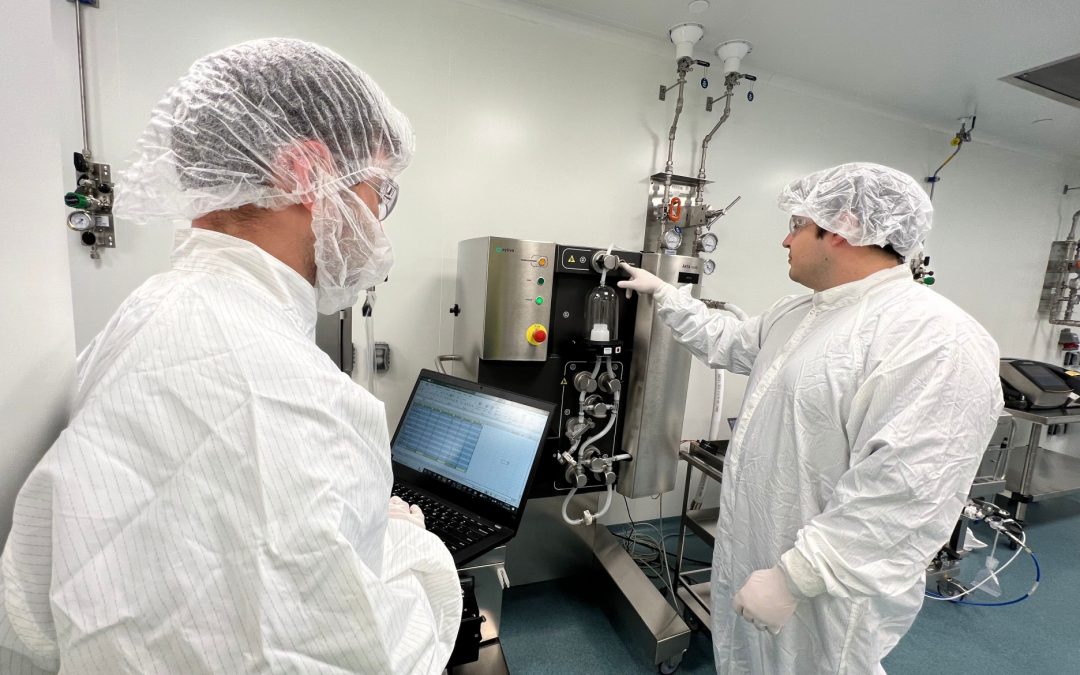
Despite the overall deal decline, there was some resilience in targeted areas. CDMOs dominated Q3 2025 with 11 transactions, compared to five in clinical trials and three in CROs. This marked the most active third quarter for the CDMO specialty on record. In just a few years, CDMOs have moved from consistently the least active to the most active Life Sciences R&D specialty. The increased presence of CDMO transactions reflects the industry’s push to build manufacturing capacity for complex biologics and advanced therapies, driven by supply chain pressures and the need to speed up pipelines.
Notable examples include PCI Pharma Services‘ acquisition of Ajinomoto Althea for an undisclosed price, Jabil‘s $309 million purchase of Pharmaceutics International and Tanvex BioPharma‘s acquisition of Bora Biologics for nearly $149 million. These deals all bolster scalable production for biologics and advanced modalities that in-house facilities struggle to match amid talent shortages and regulatory scrutiny.
Outlook for 2026 and Beyond:
As 2025 draws to a close, the Life Sciences R&D M&A market appears poised for a gentle rebound, one that builds on the quality focus of this transitional year. If the current Q4 pace holds, full-year deal volume could settle at 80 to 85 transactions, with CDMOs likely maintaining their lead through sustained demand for advanced manufacturing. Q4’s early momentum suggests parity with last year’s deal totals, but any uptick in biotech financing flows could push it higher, setting a firmer foundation for what lies ahead.
Also on the horizon is the BIOSECURE Act, which is aimed at restricting U.S. ties with certain foreign biotech firms for national security reasons. The act was introduced by a bipartisan group of legislators in 2024 and is expected to go into effect by year-end, as long as the ongoing government shutdown doesn’t delay it.
The Senate already passed its version of the 2026 National Defense Authorization Act (NDAA) on October 9, 2025, which includes the latest version of the BIOSECURE Act as an amendment. Negotiations in the House will be ongoing regarding the contents of the final NDAA. Once passed, the BIOSECURE Act is likely to spur onshoring and diversification, boosting M&A for domestic CDMOs and CROs.
While the market may not return immediately to the peaks of 2022 and 2023, this period of selective investment is likely to produce more resilient platforms and higher-quality portfolios. Ultimately, this will enhance the market’s overall appeal to future buyers, paving the way for sustained growth in 2026 and beyond.